A mold detector is one of the most effective tools for identifying hidden mold issues before they turn into costly structural damage or health concerns. In humid climates and older buildings, mold often grows silently behind walls, under flooring, or inside HVAC systems. Relying on smell or visible stains alone is not enough. Accurate detection requires proper tools, correct interpretation, and timely action.
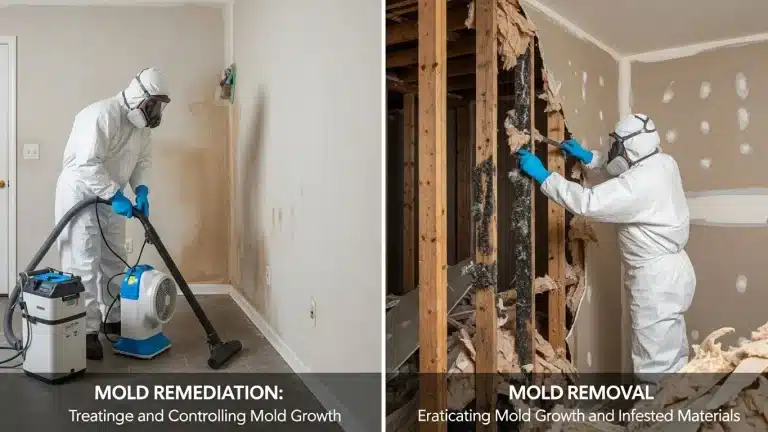
Many homeowners confuse detection with treatment. Before discussing cleanup or repair, it is important to understand the difference between inspection and remediation. This distinction is explained clearly in Mold Remediation vs Removal, which outlines why proper detection always comes first.
What Is a Mold Detector and How Does It Work?
A mold detector is a diagnostic device designed to identify conditions associated with mold growth or detect mold spores directly. Some detectors measure environmental factors, while others analyze air or surface samples.
The most common types of mold detector tools work by identifying moisture levels, airborne spores, or microbial activity. Mold itself is a biological organism, but it thrives only when the environment allows it. That is why professional detection focuses on both mold presence and mold-friendly conditions.
Common Types of Mold Detector Tools
There is no single universal mold detection device. Each tool serves a specific purpose and works best in certain scenarios.
- Moisture meters detect elevated moisture in drywall, wood, or concrete
- Air quality mold detectors analyze airborne mold spores
- Surface sampling kits identify mold species on visible areas
- Infrared cameras locate cold spots linked to hidden moisture
- Humidity sensors track long-term moisture conditions
A professional mold detector approach often combines several of these tools to avoid false positives or missed contamination.
Why Mold Detection Should Happen Early
Early detection using a mold detector prevents mold from spreading into structural components. Once mold colonies establish themselves, they release spores that travel through air systems and wall cavities.
Health risks increase with prolonged exposure. Common symptoms linked to undetected mold include respiratory irritation, headaches, fatigue, and aggravated asthma. Children, seniors, and people with weakened immune systems are especially vulnerable.
From a financial standpoint, early mold detection is significantly cheaper than full remediation. A small moisture issue behind a wall can often be fixed quickly. Left unnoticed, the same issue may require demolition, reconstruction, and professional mold removal.
For properties in British Columbia, professional mold removal vancouver services are often needed once mold is confirmed, especially when contamination affects insulation, framing, or multiple rooms.
Signs That Indicate You Need a Mold Detector
Not all mold problems are visible. A mold detector becomes necessary when indirect signs appear.
- Persistent musty odors with no visible source
- Recent water damage or flooding
- Condensation on windows and walls
- Warped flooring or bubbling paint
- Increased allergy symptoms indoors
In these situations, a mold detector provides objective data instead of guesswork.
Mold Detector vs DIY Mold Test Kits
Many homeowners consider DIY mold test kits, but these often cause confusion rather than clarity. Most homes already contain some airborne mold spores. A basic kit may confirm mold presence without indicating whether levels are harmful or where the source is located.
The table below highlights the difference:
| Feature | DIY Mold Test Kits | Professional Mold Detector |
|---|---|---|
| Accuracy | Limited | High |
| Source identification | No | Yes |
| Moisture analysis | No | Yes |
| Interpretation | User-dependent | Expert-reviewed |
| Actionable results | Low | High |
A professional mold detector assessment focuses on cause, extent, and risk, not just presence.
How Professionals Use Mold Detectors Step by Step
A structured detection process ensures reliable results and avoids unnecessary remediation.
Initial Assessment
Professionals begin by reviewing the building history, water exposure, ventilation, and occupant symptoms. This context helps guide mold detection device placement.
Moisture Mapping
Moisture meters and infrared tools identify damp zones behind walls, under flooring, and near plumbing lines. Mold cannot exist without moisture, so this step is critical.
Air and Surface Sampling
Air samples compare indoor spore levels with outdoor baselines. Surface samples confirm mold type when growth is visible. The mold detector data is then sent for lab analysis if needed.
Data Interpretation
Results are analyzed together. Elevated moisture plus abnormal spore counts usually confirm active mold growth, even if it is hidden.
When a Mold Detector Confirms a Problem
Detection does not automatically mean demolition. The response depends on severity, location, and material affected.
Minor issues may only require drying, sealing, and monitoring. Moderate contamination often requires targeted removal of affected materials. Severe cases demand full containment and professional remediation.
What matters is that the mold detection device provides a factual foundation for the next step, avoiding overreaction or underestimation.
Mold Detector Limitations You Should Know
Even advanced mold detector tools have limits. They do not predict future mold growth without environmental changes. They also cannot determine toxicity without lab analysis.
This is why interpretation matters as much as the device itself. A mold detector is a tool, not a standalone solution.
Choosing the Right Mold Detection Approach
For homeowners, landlords, and property managers, the best approach combines:
- Professional-grade mold detector tools
- Experience interpreting results
- Clear recommendations for next steps
- No conflict of interest between detection and unnecessary demolition
Detection should always aim to protect health, structure, and budget.
Final Thoughts on Professional Mold Removal
Detecting mold is only the first step. What truly protects a property is proper, thorough removal carried out by experienced professionals. Once mold is confirmed, the priority shifts from identification to eliminating the problem at its source and preventing it from returning.
Rocky Demolition & Asbestos Removal specializes in safe, effective mold removal backed by practical experience, industry standards, and a clear understanding of how mold behaves inside real buildings. Their team does not rely on surface cleaning or temporary fixes. Instead, they focus on removing affected materials, addressing moisture issues, and restoring indoor environments to a safe condition.
With a methodical approach and attention to both health and structure, Rocky Demolition ensures mold is not just removed, but properly dealt with. The result is a cleaner, safer space and long-term peace of mind for homeowners, landlords, and property managers alike.