When a building, house, or part of a property needs to be removed, two common approaches are demolition vs deconstruction. Although both processes involve taking apart an existing structure, they differ significantly in how the work is performed, how long it takes, what happens to the materials, and what the overall project is trying to achieve.
For property owners, developers, builders, and renovation contractors in Vancouver and the Lower Mainland, demolition is generally the faster approach because the priority is efficient structural removal. Deconstruction, on the other hand, focuses more heavily on carefully dismantling a building so that reusable materials can be recovered before the remaining structure is removed. Before either process begins, older properties may also require professional Asbestos Removal in North Vancouver to ensure hazardous materials are properly addressed before structural work starts.
What Is Demolition?
Demolition is the controlled removal of all or part of a structure using a combination of mechanical equipment, specialized tools, and manual labour. The primary objective is usually to remove the structure safely and efficiently so that the property can be renovated, redeveloped, cleared, or prepared for another phase of construction.
The exact demolition methods used depend on factors such as the size of the building, structural materials, project scope, site access, surrounding properties, and whether only part of the structure needs to be removed. For projects involving interior spaces, understanding How Long Does Interior Demolition Take? can also help property owners plan timelines and coordinate the next stages of renovation or construction.
How the Demolition Process Works
A professional demolition project typically involves several stages before structural removal begins.
- Site assessment: The building and surrounding property are reviewed to understand structural conditions, access limitations, nearby structures, and project requirements.
- Utility disconnection: Gas, electricity, water, and other services may need to be properly disconnected or isolated before demolition work begins.
- Hazardous-material checks: Older buildings may require assessment for asbestos or other potentially hazardous materials before structural work can proceed.
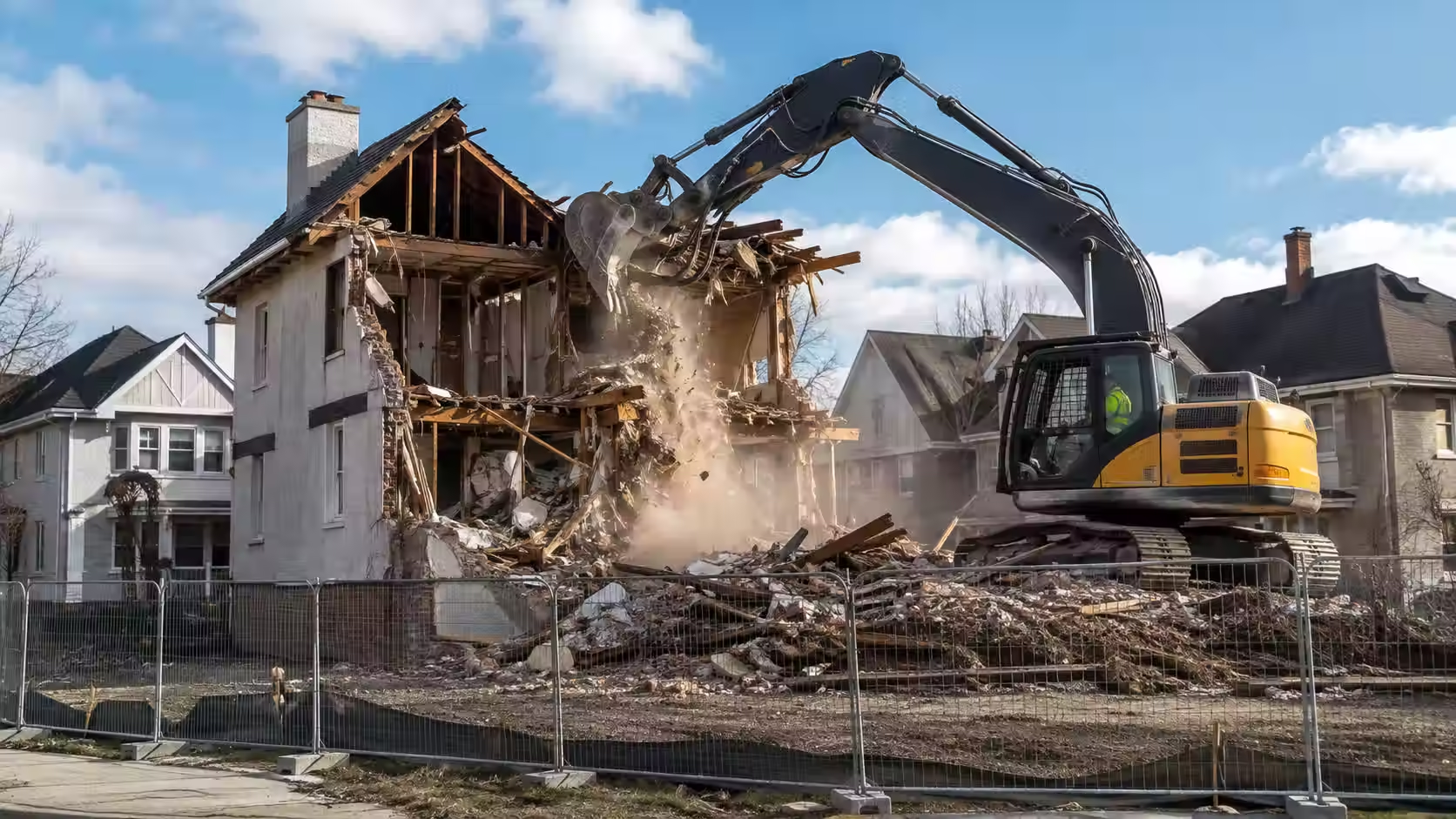
- Structural demolition: The structure is removed using appropriate machinery, tools, and controlled demolition techniques.
- Debris removal: Concrete, wood, drywall, metal, and other demolition debris are collected and removed from the site.
- Site cleanup: The work area is cleared and prepared for the next stage of construction or redevelopment.
Common Types of Demolition
Demolition does not always mean completely removing an entire building. Different projects require different levels of structural removal.
- Full demolition: Complete removal of a building or structure.
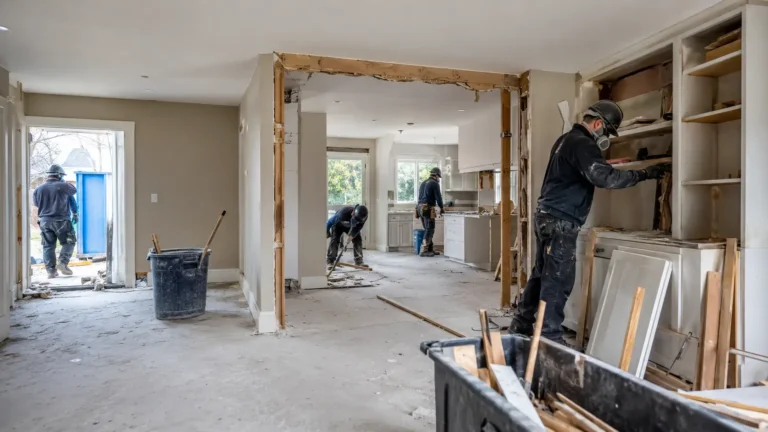
- Interior demolition: Removal of interior walls, ceilings, flooring, fixtures, finishes, and other non-structural elements.
- Selective demolition: Carefully removing specific sections while protecting parts of the structure that will remain.
- Commercial demolition: Demolition involving offices, retail spaces, warehouses, industrial facilities, or other commercial properties.
- Residential demolition: Removal of houses, garages, additions, interior areas, or other residential structures.
Property owners considering structural removal can learn more about professional demolition services when evaluating the best approach for their project.
What Is Deconstruction?
Deconstruction is the systematic dismantling of a building or part of a building with the goal of preserving materials for reuse, resale, recycling, or repurposing.
The main difference between demolition and deconstruction is that demolition primarily focuses on removing the structure efficiently, while deconstruction places greater emphasis on recovering usable building components before they become mixed demolition debris.
Instead of immediately using heavy equipment to remove the structure, workers may carefully remove fixtures, cabinets, doors, flooring, lumber, and other valuable materials in stages.
How Building Deconstruction Works
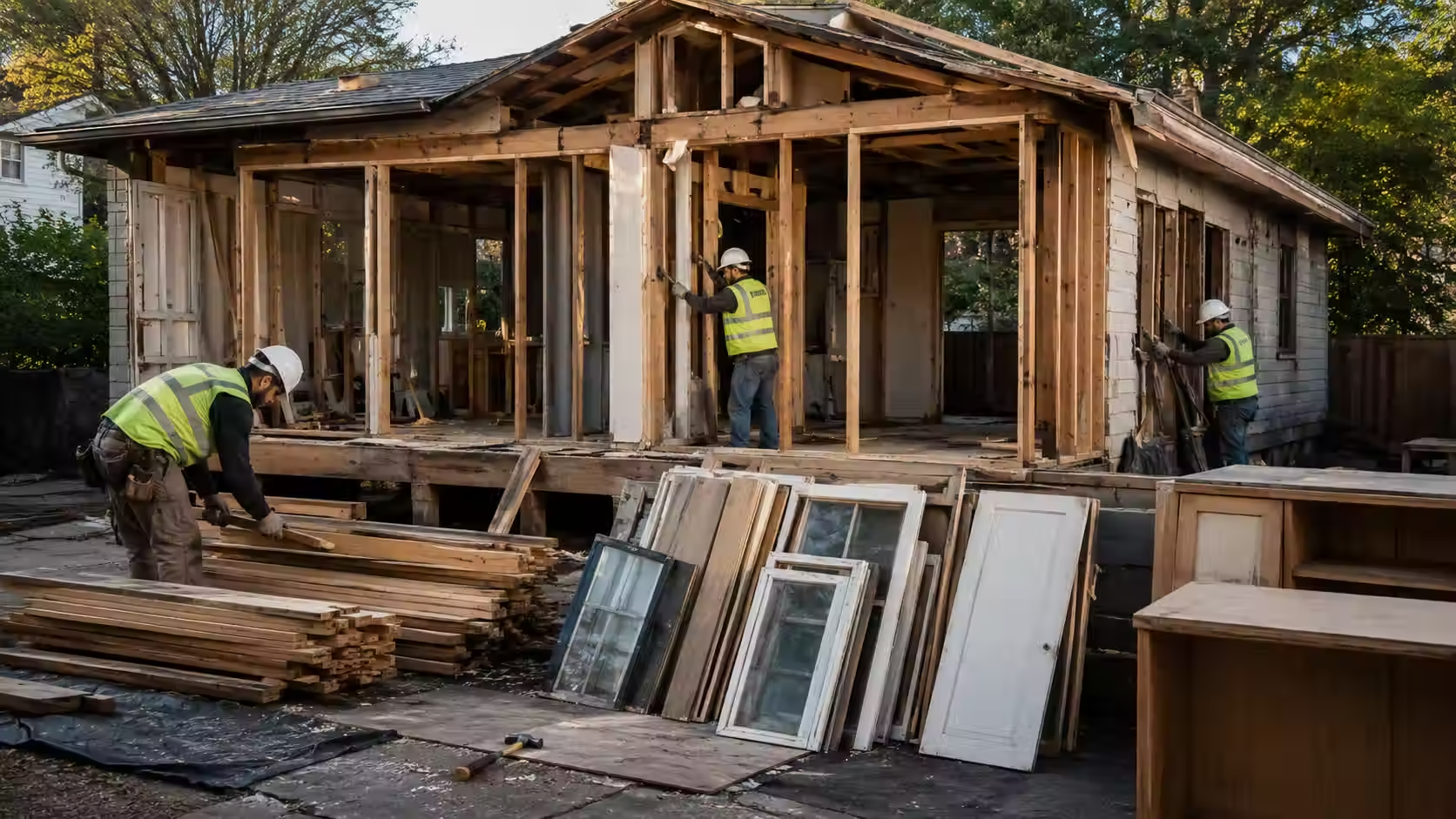
Building deconstruction usually proceeds in the opposite direction from traditional construction. Materials that were installed toward the end of the original building process are often removed first.
A typical process may include:
- Removing appliances, fixtures, and reusable equipment.
- Taking out cabinets, shelving, doors, and architectural components.
- Carefully removing flooring and finish materials.
- Separating reusable lumber and framing materials where practical.
- Dismantling structural components in a controlled sequence.
- Sorting remaining materials for reuse, recycling, or disposal.
Because the objective is material recovery rather than simply structural removal, house deconstruction generally requires more manual labour and careful planning.
What Materials Can Be Salvaged During Deconstruction?
The materials that can be recovered depend heavily on the age, condition, construction style, and previous renovations of the building.
Potentially reusable materials may include:
- Lumber and timber
- Interior and exterior doors
- Windows
- Kitchen cabinets
- Bathroom fixtures
- Lighting fixtures
- Hardwood flooring
- Metal components
- Brick
- Architectural details
- Hardware
- Some structural materials
The ability to salvage materials from demolition or deconstruction can reduce the amount of usable material that enters the waste stream.
Demolition vs Deconstruction: Key Differences
Choosing between demolition and deconstruction usually comes down to project priorities. Speed, labour, cost, building condition, material value, site access, and waste-reduction goals can all influence the decision.
| Factor | Demolition | Deconstruction |
|---|---|---|
| Main Goal | Remove the structure efficiently | Dismantle the structure while recovering materials |
| Speed | Generally faster | Generally slower |
| Material Recovery | More limited | Higher potential |
| Labour | Often lower | Usually more labour-intensive |
| Waste | Can generate more mixed debris | Can reduce waste through reuse and sorting |
| Salvage Potential | Limited unless materials are removed beforehand | A major project objective |
| Project Suitability | Often suitable for time-sensitive removal | Often suitable when material recovery is a priority |
The distinction is not always absolute. Modern demolition projects may include material separation and recycling, while deconstruction projects may eventually use conventional demolition methods after reusable components have been removed.
Which Is Faster: Demolition or Deconstruction?
Demolition is generally faster than deconstruction.
Mechanical demolition allows large sections of a structure to be removed efficiently using specialized equipment. Deconstruction requires workers to dismantle the building much more carefully so that valuable components are not unnecessarily damaged.
For example, removing cabinets, flooring, fixtures, doors, lumber, and architectural features individually requires significantly more handling than removing the same section as part of a standard demolition process.
However, project duration still depends on factors such as building size, access, structural complexity, hazardous materials, neighbouring properties, and the amount of material being recovered.
Which Costs More: Demolition or Deconstruction?
Deconstruction can involve higher labour costs because considerably more manual work may be required. However, this does not mean deconstruction will always result in a higher overall project cost.
Several factors influence the final cost of either approach:
- Building size
- Building construction type
- Labour requirements
- Site accessibility
- Equipment requirements
- Amount and condition of salvageable materials
- Hazardous-material management
- Debris hauling requirements
- Disposal fees
- Material sorting requirements
Deconstruction can involve higher labour costs, but material salvage and reduced disposal requirements may offset part of those costs in some projects.
A building containing valuable timber, reusable fixtures, high-quality flooring, architectural components, or other recoverable materials may offer more opportunities for material reuse than a structure containing heavily damaged or low-value materials.
Which Option Produces Less Construction Waste?
Deconstruction generally provides greater opportunities for construction waste reduction because materials are separated before they become part of a mixed demolition waste stream.
Instead of sending usable doors, cabinets, lumber, fixtures, flooring, and other building materials directly to disposal, deconstruction allows appropriate materials to be identified for potential reuse or recycling.
This approach can support:
- Reduced landfill waste
- Material reuse
- Improved waste separation
- Recovery of reusable building components
- Recycling of metal and other suitable materials
- More controlled management of construction debris
Conventional demolition can also incorporate waste sorting and recycling. The main difference is that deconstruction typically makes material recovery a central part of the dismantling process from the beginning.
When Does Demolition Make More Sense?
Demolition may be the more practical option when the primary objective is efficient structural removal rather than material recovery.
It may make more sense when:
- The building needs to be removed relatively quickly.
- Few materials inside the structure have meaningful reuse value.
- The building has extensive structural damage.
- A complete redevelopment of the property is planned.
- Recovering individual components would be impractical.
- Site or structural conditions make extensive deconstruction difficult.
For many renovation and redevelopment projects, demolition provides the most straightforward way to prepare a property for new construction.
When Does Deconstruction Make More Sense?
Deconstruction may be worth considering when the building contains materials that can realistically be recovered and reused.
It may be appropriate when:
- The building contains reusable lumber or timber.
- Doors, cabinets, flooring, or fixtures are in good condition.
- Architectural materials have reuse or resale potential.
- Reducing construction waste is an important project objective.
- Selective dismantling is practical.
- The owner wants to preserve specific building materials before removal.
Older houses can sometimes contain high-quality wood, original architectural components, or fixtures that may be suitable for salvage, although the practical value of recovery must be evaluated on a project-by-project basis.
Can Demolition and Deconstruction Be Combined?
Yes. Many projects do not have to choose exclusively between deconstruction vs demolition.
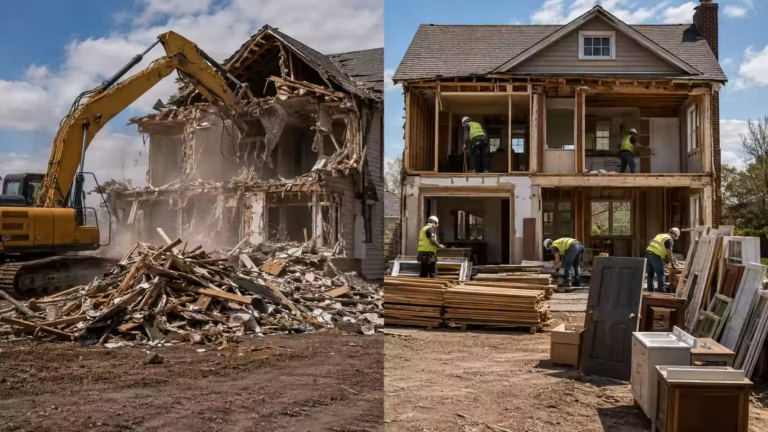
A hybrid approach can combine material recovery with efficient structural removal.
For example, a project may proceed as follows:
- Valuable fixtures and equipment are removed.
- Reusable doors, cabinets, flooring, lumber, or architectural materials are salvaged.
- Specific building areas are selectively dismantled.
- The remaining structure is mechanically demolished.
- Demolition debris is sorted, hauled, recycled, or disposed of as appropriate.
This approach can provide some of the material-recovery benefits of deconstruction without requiring every component of the building to be dismantled manually.
It can also overlap with selective demolition, where only specific portions of a building are removed while surrounding areas remain intact.
What Should Be Checked Before Demolition or Deconstruction?
Whether a project uses demolition, deconstruction, or a combination of both, proper planning should happen before physical work begins.
Hazardous Materials
Older buildings may contain materials that require additional assessment or specialized handling before demolition or deconstruction.
Potential concerns can include:
- Asbestos-containing materials
- Lead-containing materials
- Mold or moisture-damaged materials
- Other potentially hazardous building products
Because these materials may be disturbed during structural removal, appropriate asbestos testing or hazardous-material assessment may be required before work proceeds.
If asbestos-containing materials are identified, professional asbestos removal may also be necessary before demolition activities begin.
Utilities and Site Conditions
Utilities and surrounding site conditions also need to be considered before structural work starts.
Important considerations can include:
- Gas connections
- Electrical services
- Water lines
- Drainage systems
- Vehicle and equipment access
- Neighbouring buildings
- Shared walls
- Overhead or underground services
- Space available for debris handling
These factors can influence the equipment, demolition sequence, labour requirements, and overall project plan.
Permits and Local Requirements
Permit and regulatory requirements can vary depending on the municipality, property type, building characteristics, and project scope.
Before beginning demolition or deconstruction, property owners should determine which local approvals, assessments, and project requirements apply to their specific property.
Demolition vs Deconstruction in Vancouver
Choosing between demolition and deconstruction in Vancouver and the Lower Mainland can involve additional considerations related to property density, access, building age, waste handling, and neighbouring structures.
Properties in Vancouver and nearby communities such as Burnaby may have limited equipment access or relatively tight working areas compared with less densely developed locations.
Older residential and commercial buildings can also require additional planning before structural removal, particularly when hazardous materials may be present.
Other project considerations may include:
- Limited space for demolition equipment
- Proximity to neighbouring buildings
- Older construction materials
- Renovation versus full redevelopment
- Waste sorting and hauling requirements
- Potential salvage opportunities
- Hazardous-material assessment
Because site conditions vary significantly across the Lower Mainland, the most practical approach should be based on the actual building rather than assuming that demolition or deconstruction is automatically the better option.
How to Decide Between Demolition and Deconstruction
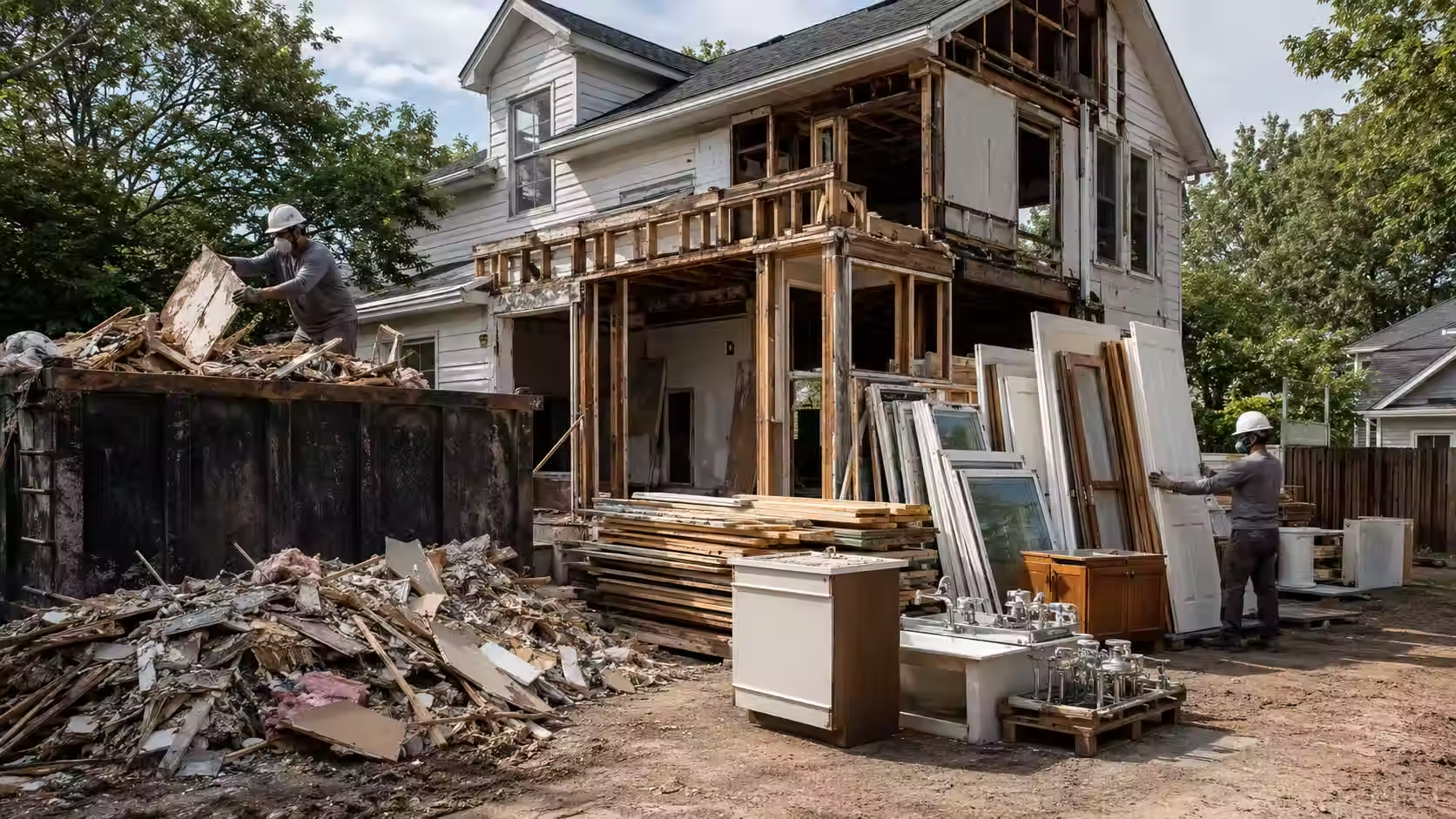
The right approach depends on what matters most for the project.
Choose demolition when:
- Speed is a major priority.
- Complete structural removal is required.
- There are relatively few reusable materials.
- The building is heavily damaged.
- Material salvage would provide limited practical value.
Consider deconstruction when:
- The building contains reusable materials.
- Waste reduction is an important objective.
- Specific fixtures or architectural components should be preserved.
- Selective dismantling is practical.
- Additional labour and project time can be accommodated.
In some projects, a combination of both approaches may be the most practical option. Recovering useful materials first and demolishing the remaining structure afterward can balance efficiency with material recovery.
Conclusion
The main difference between demolition and deconstruction is the objective of the removal process. Demolition primarily focuses on removing a structure safely and efficiently, while deconstruction focuses on controlled dismantling and recovering reusable materials.
Demolition is generally faster, while deconstruction can offer greater opportunities for material reuse and construction waste reduction. Cost, project timeline, building condition, salvage potential, hazardous materials, site access, and redevelopment plans should all be considered before choosing an approach.
For some properties, the best solution may be a combination of the two methods.
Property owners planning demolition or deconstruction in Vancouver or the Lower Mainland can have the building and project conditions assessed before deciding which approach is most practical. Rocky Demolition can evaluate the site, removal requirements, access conditions, and hazardous-material concerns, including situations that may require professional asbestos removal Vancouver, along with the overall project scope to help determine an appropriate demolition strategy.
Frequently Asked Questions
Is deconstruction the same as demolition?
No. Demolition focuses primarily on removing a structure efficiently, while deconstruction involves systematically dismantling a structure so that usable building materials can be recovered.
Is deconstruction more expensive than demolition?
Deconstruction can have higher labour costs because materials are removed more carefully. However, the final cost depends on factors such as building size, salvage value, disposal costs, site conditions, and the amount of material being recovered.
Is deconstruction better for the environment?
Deconstruction can reduce construction waste by allowing more building materials to be reused, recycled, or separated before disposal. Conventional demolition can also incorporate recycling and waste separation, but material recovery is usually a larger part of the deconstruction process.
Can materials from a demolished house be reused?
Yes. Depending on their condition, materials such as lumber, doors, windows, cabinets, flooring, fixtures, brick, and metal may sometimes be recovered before or during demolition.
How long does building deconstruction take?
Deconstruction generally takes longer than conventional demolition because materials must be dismantled and separated carefully. The actual project duration depends on building size, construction type, site access, the amount of salvageable material, and other project conditions.
Can part of a building be deconstructed?
Yes. Selective deconstruction can be used when only certain portions of a building or specific materials need to be removed while other areas remain in place.
Do you need an asbestos inspection before demolition in Vancouver?
Older buildings may require hazardous-material assessment before demolition or renovation work begins. The exact requirements depend on the building, municipality, project scope, and applicable regulations, so project-specific requirements should be confirmed before work starts.