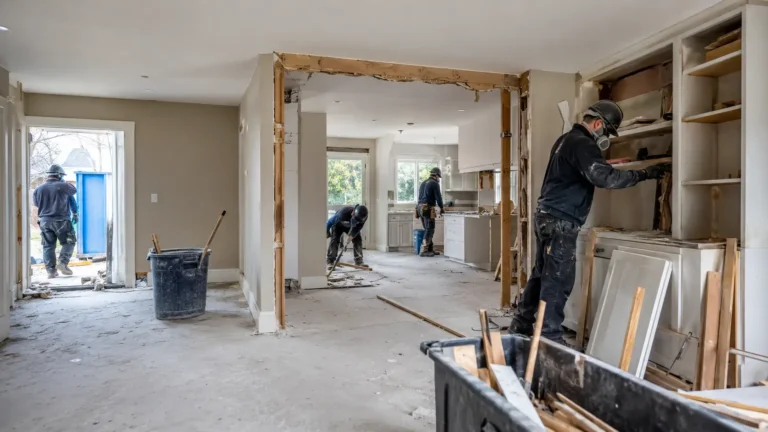
Post-Demolition Cleanup That Keeps Contractor Projects Moving
For contractors, demolition is only one part of the project. Once walls, flooring, ceilings, fixtures, concrete, or structural materials have been removed, the site still needs to be cleared, organized, and prepared for the next phase of work. That is where professional demolition site cleanup services become essential.
A clean post-demolition site helps contractors protect their schedule, reduce disruption between trades, improve site access, and keep the project moving toward inspection, reconstruction, restoration, or final turnover.
What Are Demolition Site Cleanup Services?
Demolition site cleanup services involve the removal, sorting, loading, disposal, and preparation work required after demolition or deconstruction has taken place. This may include clearing drywall, wood, flooring, tile, concrete, insulation, cabinets, fixtures, metal, glass, packaging, and other construction debris from a residential, commercial, or industrial job site.
For contractors, cleanup is not just a basic labour task. It is a project control function. When debris is left unmanaged, the next trade may not be able to work safely or efficiently. Framing crews need open access. Electricians and plumbers need clear pathways. Restoration teams need the site free from loose waste. Inspectors need visibility. Property owners expect progress.
A professional demolition cleanup crew helps bridge the gap between removal and rebuild. The goal is to leave the site safer, cleaner, easier to navigate, and ready for the next stage of construction.
Why Contractors Need a Dedicated Cleanup Partner
General contractors and renovation companies often work under tight timelines. A project can be delayed when debris piles up, bins are not coordinated, materials are not separated properly, or access routes become blocked. These issues may seem small at first, but they can affect labour productivity, scheduling, client satisfaction, and overall site safety.
A dedicated cleanup partner understands that contractors need more than someone to remove garbage. They need a team that can work around active construction schedules, follow site instructions, separate materials when needed, and support a practical workflow from demolition to reconstruction.
This is especially important on projects where multiple trades are scheduled close together. If demolition takes place on Monday and framing begins Tuesday, the cleanup window is limited. The site must be cleared efficiently so the next team can start without delays. A reliable demolition site cleanup company helps contractors avoid unnecessary downtime between phases.
Common Projects That Require Demolition Site Cleanup
Demolition cleanup is useful across many types of residential, commercial, and contractor-led projects. The cleanup scope depends on the type of demolition, the materials removed, the size of the site, and the condition of the property.
Interior Demolition Projects
Interior demolition often creates large amounts of mixed debris. Drywall, framing materials, flooring, ceiling tiles, insulation, cabinets, doors, trim, and fixtures may all need to be removed from the site. Contractors performing tenant improvements, office renovations, retail build-outs, or residential remodels often need cleanup support before mechanical, electrical, plumbing, or finishing work can continue.
Residential Renovations
Home renovation projects can quickly become cluttered when kitchens, bathrooms, basements, garages, or entire interiors are stripped out. A professional cleanup crew can remove demolition debris, clear access routes, and help prepare the home for rebuilding. This is useful for builders, renovation contractors, restoration companies, and homeowners working with a contractor-led project.
Commercial Strip-Outs
Commercial strip-outs often involve the removal of partitions, flooring, millwork, ceilings, fixtures, and non-structural materials. In these projects, cleanup has to be organized because commercial sites often have tighter access, shared buildings, elevators, loading zones, parking restrictions, and neighbouring tenants. A coordinated cleanup process helps reduce disruption and keeps the project more controlled.
Restoration and Insurance-Related Work
Restoration contractors may need cleanup after fire, flood, mold, or structural damage removal. These sites can involve damaged materials, odour concerns, moisture-affected debris, or additional safety precautions. Proper cleanup helps restoration teams move from demolition and removal into drying, treatment, repair, and reconstruction.
Deconstruction and Selective Material Removal
Deconstruction projects often require more careful handling than standard demolition. Materials may need to be separated, staged, or removed in a controlled sequence. Cleanup support helps keep the site organized while reusable, recyclable, or disposal-bound materials are managed efficiently. For projects that require careful removal instead of aggressive demolition, contractors can review Rocky Demolition’s deconstruction and demolition services to plan the right approach before cleanup begins.
What Should Be Included in a Professional Demolition Cleanup Service?
Not every cleanup job is the same, but contractors should expect a professional team to provide a structured process. Good demolition site cleanup starts with understanding the project, the site conditions, the debris type, and the contractor’s schedule.
A complete cleanup scope may include debris removal, waste sorting, loading, bin coordination, sweep-out service, material staging, removal of loose hazards, access path clearing, disposal planning, and preparation for the next trade. The cleanup team should also communicate clearly with the contractor about what can be removed, what needs to stay, and what requires special handling.
For example, a commercial interior demolition project may require drywall and metal studs to be separated from general waste. A residential renovation may require old cabinets, flooring, and drywall to be removed from tight interior spaces without damaging remaining finishes. A restoration site may require more careful handling due to contamination concerns. A contractor-focused cleanup company should be able to adapt to these conditions.
How Cleanup Supports Job Site Safety
Demolition debris can create practical safety issues on a job site. Loose nails, broken wood, sharp metal, scattered tile, concrete fragments, exposed fasteners, dust, and unstable piles of material can increase the risk of slips, trips, cuts, and access problems. Even when demolition work is complete, the site may not be ready for the next phase until these hazards are removed.
Professional demolition debris removal helps contractors maintain better site control. Clear walkways allow crews to move tools and materials safely. Organized debris areas reduce confusion. Proper loading and removal reduce clutter. A cleaned site also makes it easier to identify remaining work, damaged materials, access issues, or areas that need additional preparation.
For contractors, this is important because site safety is connected to productivity. A crew that has to spend the first part of the day moving debris out of the way is not working efficiently. A cleanup crew allows trades to focus on their actual scope of work rather than managing leftover demolition waste.
Demolition Cleanup and Project Scheduling
One of the biggest reasons contractors hire demolition site cleanup services is scheduling. Construction projects are often planned in phases, and each phase depends on the previous one being completed properly. If cleanup is not finished, the next phase can be delayed.
For example, after selective demolition, the site may need to be clear before framing begins. After flooring removal, the subfloor may need to be visible for inspection or repair. After ceiling removal, mechanical or electrical trades may need clear access. After a commercial strip-out, the space may need to be ready for layout, rough-ins, or tenant improvement work.
A cleanup partner can help contractors plan the removal process around key project milestones. This may include same-day debris removal, phased cleanup, end-of-day cleanup, or full post-demolition site preparation. The best approach depends on the size of the project, the access conditions, and the timing of the next trade.
Why Disposal Planning Matters
Demolition cleanup is not only about removing debris from the building. It also involves deciding how materials will be handled once they leave the work area. Different materials may require different disposal or recycling pathways. Wood, metal, concrete, drywall, tile, flooring, fixtures, and general waste may need to be sorted depending on the project requirements and disposal options available.
Contractors benefit from cleanup crews that understand practical disposal planning. Proper material handling can reduce unnecessary site congestion, prevent overloaded work areas, and make the cleanup process more efficient. On larger projects, the cleanup strategy may involve bins, trucks, staging areas, loading zones, or scheduled pickups.
When hazardous materials are present, disposal planning becomes even more important. Materials affected by asbestos, mold, or other site-specific hazards should not be treated as standard construction debris. In those situations, cleanup must be coordinated with the proper assessment, containment, removal, and disposal procedures before general demolition cleanup continues.
Cleanup After Asbestos Removal or Hazardous Material Work
Many older buildings in BC may require additional assessment before renovation or demolition work begins. If asbestos-containing materials, mold-affected materials, or other hazardous conditions are identified, contractors need cleanup support that respects the sequence of work. General cleanup should not interfere with required abatement procedures.
After asbestos removal or hazardous material work is completed by qualified professionals, the site may still require careful preparation before the next construction phase. This can include clearing non-hazardous demolition debris, removing remaining construction waste, coordinating disposal, and preparing the area for trades.
For contractors, working with a company that understands demolition, asbestos removal, mold removal, and cleanup can reduce coordination issues. Instead of managing separate vendors who do not understand each other’s scope, contractors can work with a team that recognizes how hazardous material work, demolition, and post-demolition cleanup are connected. If suspect materials are present before renovation or demolition, Rocky Demolition also provides asbestos removal and asbestos testing services to help projects move forward safely.
Residential vs. Commercial Demolition Cleanup
Residential and commercial cleanup projects often require different planning. A residential renovation may involve tighter interior access, occupied neighbouring homes, smaller driveways, limited bin placement, and a need to protect remaining finishes. A commercial project may involve larger debris volumes, building management rules, elevators, loading docks, shared hallways, after-hours work, and coordination with multiple contractors.
In residential projects, cleanup often needs to be careful and controlled. Debris may need to be carried through finished areas, down stairs, or through narrow access points. Contractors may also need the property left presentable for homeowners, inspectors, or other trades.
In commercial projects, efficiency and coordination are usually the priority. The cleanup crew may need to clear large open spaces, remove materials from multiple units, manage debris from a strip-out, or work within a building’s access schedule. A professional cleanup company should be able to adjust to both environments.
What Contractors Should Look for in a Cleanup Company
Choosing the right demolition cleanup partner can make a significant difference in how smoothly a project moves forward. Contractors should look for a company that understands construction sequencing, communicates clearly, shows up prepared, and can handle the type of debris generated by the project.
A good cleanup partner should ask practical questions before starting. What materials are being removed? Is the site residential or commercial? Are there access limitations? Is there a bin on site? Are hazardous materials involved? What areas need to be cleared first? When does the next trade arrive? These questions help create a cleanup plan that supports the project instead of disrupting it.
Contractors should also look for a company that can scale. A small bathroom demolition cleanup is different from a full commercial strip-out. A multi-phase renovation is different from a single-day removal project. The cleanup company should be able to provide the right labour, equipment, and disposal coordination for the job.
How Rocky Demolition Supports Contractors in BC
Rocky Demolition & Asbestos Removal provides support for demolition, asbestos removal, asbestos testing, deconstruction, mold removal, cleanup, and disposal-related work. For contractors, this service mix is useful because demolition cleanup is often connected to other site preparation needs.
A contractor may start with a simple interior demolition project and discover suspect materials that require asbestos testing. A restoration contractor may remove damaged materials and then need debris cleanup before repair begins. A commercial contractor may need a unit stripped, cleaned, and prepared for tenant improvements. A builder may need a site cleared after selective demolition before framing or reconstruction begins.
Rocky Demolition can support these workflows by helping contractors remove debris, coordinate cleanup, and prepare the site for the next phase. This is particularly relevant for projects in Burnaby, Vancouver, Richmond, Coquitlam, Surrey, Langley, New Westminster, Delta, Port Moody, North Vancouver, Abbotsford, and nearby communities. Contractors can review Rocky Demolition’s service areas to confirm coverage for their project location.
Example Cleanup Scenarios for Contractors
Scenario 1: Interior Renovation Cleanup
A renovation contractor removes drywall, cabinets, flooring, and fixtures from a residential property. Before the next trade begins, the site needs to be cleared of loose debris, swept out, and prepared for framing and rough-ins. A demolition cleanup crew removes the waste, clears the access paths, and helps the contractor keep the project on schedule.
Scenario 2: Commercial Tenant Improvement
A commercial space is being prepared for a new tenant. Old partitions, ceiling materials, flooring, and millwork are removed. The project has limited loading access and a tight turnover date. A cleanup team coordinates debris removal so the space is ready for layout, mechanical work, and build-out.
Scenario 3: Post-Abatement Preparation
A contractor is working on an older building where asbestos-containing materials were identified and removed by qualified professionals. After the required removal work is completed, the remaining non-hazardous demolition debris needs to be cleared so construction can continue. Cleanup support helps transition the project from abatement to rebuild.
Scenario 4: Restoration Debris Removal
A restoration company removes damaged drywall, flooring, trim, and other materials after a property loss. Once demolition is complete, the site needs to be cleaned and organized before drying, repairs, or reconstruction can proceed. A cleanup crew helps restore order to the job site and keeps the project moving.
How Contractors Can Prepare for a Faster Cleanup
Contractors can make demolition cleanup more efficient by planning ahead. Before cleanup begins, identify the debris type, estimate the volume of waste, confirm access points, and clarify what materials should remain on site. If there are hazardous material concerns, those should be addressed before general cleanup begins.
It is also helpful to determine whether the cleanup should happen in one phase or multiple phases. On some projects, waiting until all demolition is finished makes sense. On others, phased cleanup is better because it keeps the site usable while work continues. For example, a contractor may want debris removed at the end of each day during an active commercial project to keep pathways open and reduce disruption.
Clear communication helps avoid mistakes. Contractors should confirm which rooms, floors, units, or exterior areas need cleanup. They should also identify any materials that should be saved, reused, or left for another trade. The more specific the cleanup scope is, the more efficient the process becomes.
What Is Post-Demolition Cleanup?
Post-demolition cleanup is the process of removing demolition debris, sorting materials, clearing work areas, coordinating disposal, and preparing a construction site for the next phase of work. For contractors, it helps improve site safety, reduce delays, and make the property ready for trades, inspection, repair, or rebuild.
Demolition Cleanup Checklist for Contractors
- Confirm the demolition scope and cleanup areas before work begins.
- Identify the type and volume of debris expected.
- Check whether asbestos, mold, or other hazardous materials may be involved.
- Plan bin placement, truck access, elevators, loading zones, or staging areas.
- Separate materials when required or practical.
- Clear pathways for workers, tools, and materials.
- Schedule cleanup around the next trade or inspection milestone.
- Confirm final site readiness with the project lead.
Why Clean Sites Help Contractors Win Repeat Work
Contractors are judged not only by the finished result but also by how the job site is managed during the project. A clean, organized site communicates professionalism. It shows property owners, builders, project managers, and other trades that the contractor has control of the work environment.
For commercial contractors, this can affect relationships with property managers and building operators. For residential contractors, it can affect homeowner confidence. For restoration companies, it can help clients feel that progress is being made after a stressful property damage event. Cleanup is not just a back-end task. It contributes to the overall client experience.
When demolition debris is removed quickly and properly, contractors can present a more professional site and reduce friction with clients, neighbours, building managers, and other trades.
Book Demolition Site Cleanup Support
If you are managing a renovation, restoration, commercial strip-out, residential demolition, deconstruction project, or post-abatement construction phase, professional cleanup can help protect your timeline and prepare the site for what comes next.
Rocky Demolition & Asbestos Removal works with contractors who need reliable demolition services, cleanup support, debris removal, site preparation, and related demolition support across Burnaby, Vancouver, and surrounding BC communities.
Contact Rocky Demolition & Asbestos Removal to discuss demolition site cleanup services for your next contractor-led project.