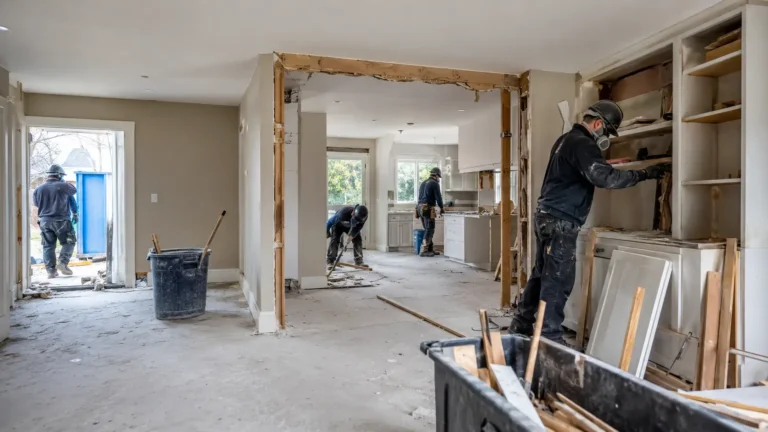
Qualified Demolition Support for Contractor-Led Projects
Certified demolition subcontractors help contractors manage removal work with better planning, safer site coordination, cleaner debris handling, and fewer interruptions between trades. For general contractors, restoration companies, builders, and project managers, the right demolition partner can make the difference between a controlled project phase and a job site that creates delays before construction even begins.
Demolition is not just about tearing materials out. It affects access, safety, scheduling, hazardous material planning, disposal, cleanup, and the quality of the handoff to the next trade. When demolition is handled by an unqualified crew, small mistakes can create larger problems for the entire project team.
For contractors working in Burnaby, Vancouver, Richmond, Surrey, Coquitlam, Langley, and nearby BC communities, qualified demolition support is especially important on renovation, restoration, tenant improvement, interior strip-out, asbestos removal, and site preparation projects.
What Does a Certified Demolition Subcontractor Do?
A demolition subcontractor is hired by a general contractor, builder, restoration company, or project manager to complete a defined demolition scope within a larger construction project. This may include interior demolition, selective removal, commercial strip-outs, residential renovation demolition, debris removal, deconstruction, hazardous material coordination, or post-demolition cleanup.
In practical terms, a qualified subcontractor helps remove what needs to go while protecting what needs to stay. That distinction is important. Many contractor-led projects do not require full structural demolition. They require controlled removal of drywall, flooring, ceilings, fixtures, cabinets, millwork, non-load-bearing walls, insulation, and old finishes so the next phase of work can begin.
The word certified should be understood as a quality and qualification signal. It means the subcontractor should have the right training, experience, insurance, safety process, equipment, and trade-specific knowledge for the work being performed. When asbestos or other regulated materials are involved, contractors should also verify the required licensing, certifications, and project-specific procedures before the work begins.
Why General Contractors Should Not Treat Demolition as Basic Labour
One of the most common mistakes in renovation and construction planning is treating demolition as simple labour. On the surface, removal work can look straightforward. Walls come down, flooring comes up, old fixtures are removed, and debris is hauled away. But on an active job site, demolition decisions can affect everything that happens afterward.
A careless demolition crew can damage materials that were supposed to remain, disturb suspect materials, overload waste areas, block access, create dust problems, or leave the next trade with a site that is not ready. These issues can create friction between the general contractor, subcontractors, property owner, building manager, and inspectors.
Qualified demolition subcontractors understand that demolition is part of the construction sequence. The goal is not simply to remove materials. The goal is to prepare the site for the next phase with minimal disruption, clear access, controlled debris, and a work area that supports the broader project plan.
Better Project Sequencing Starts With the Right Subcontractor
Contractor-led projects depend on sequencing. Demolition usually comes before framing, electrical, plumbing, HVAC, insulation, drywall, flooring, millwork, painting, and finishing. If the demolition phase is late, incomplete, unsafe, or poorly cleaned, every trade after it can be affected.
A certified demolition subcontractor can help protect the project schedule by reviewing the scope before work starts, identifying access concerns, planning debris removal, and coordinating the demolition phase around the general contractor’s timeline. This is especially important when multiple trades are scheduled closely together.
For example, a commercial tenant improvement may need interior partitions, ceilings, and flooring removed before layout and rough-ins begin. A restoration contractor may need damaged materials removed before drying, treatment, and rebuilding can continue. A residential renovation may require selective demolition before framing and mechanical upgrades. In each case, the demolition subcontractor’s work determines how smoothly the next phase begins.
How Qualified Demolition Crews Reduce Site Risk
Demolition creates temporary site hazards. Loose debris, sharp materials, unstable assemblies, exposed fasteners, dust, broken tile, damaged drywall, and heavy waste can all affect site safety and access. These risks need to be managed carefully, especially when other trades, building occupants, or property managers are involved.
A qualified demolition crew uses a more controlled approach. They understand how to remove materials in the correct order, maintain cleaner pathways, separate waste when needed, and avoid unnecessary damage to adjacent areas. They also understand the importance of communication when unexpected conditions appear behind walls, under flooring, or above ceilings.
For general contractors, this reduces the amount of direct supervision needed during the demolition phase. It also helps create a more professional site environment for clients, owners, inspectors, and other trades.
Certified Subcontractors Help Protect the General Contractor’s Reputation
When a general contractor hires a subcontractor, that subcontractor’s work reflects on the entire project. If demolition is messy, delayed, unsafe, or poorly coordinated, the client may not separate the demolition crew from the general contractor. The GC is usually the one expected to explain what happened and fix the issue.
This is why subcontractor selection matters. Hiring a qualified demolition partner helps protect the contractor’s reputation with homeowners, commercial clients, property managers, developers, and other trades. A professional demolition subcontractor arrives prepared, understands the scope, communicates clearly, and leaves the site ready for the next stage.
Strong subcontractors do not just complete tasks. They reduce pressure on the project lead by handling their scope with less friction and fewer avoidable problems.
Demolition Subcontractors for Commercial Projects
Commercial projects often need demolition subcontractors because the work must be completed around access limits, building rules, tenant schedules, loading restrictions, and multiple trades. Offices, retail units, warehouses, restaurants, clinics, and industrial spaces often require selective interior removal before renovation or tenant improvements can proceed.
A commercial demolition subcontractor may remove partitions, ceiling systems, flooring, fixtures, millwork, non-structural walls, old equipment, or damaged materials. The work may also involve controlled debris routes through elevators, corridors, loading docks, or shared parking areas.
For tenant improvement contractors, proper demolition support helps create a clean shell or prepared layout for new construction. For commercial property managers, it helps reduce disruption to neighbouring tenants. For general contractors, it supports project turnover by keeping the space organized from demolition through rebuild.
Rocky Demolition & Asbestos Removal provides demolition services in Burnaby and Vancouver for commercial and residential projects, including removal scopes connected to renovation and site preparation.
Demolition Subcontractors for Residential Renovations
Residential renovation projects also benefit from qualified demolition support. A home renovation may require kitchen removal, bathroom demolition, basement strip-out, flooring removal, ceiling removal, wall openings, garage clearing, or selective structural preparation. These tasks can affect remaining finishes, utilities, access routes, and homeowner confidence.
In residential work, cleanliness and care matter. Homeowners often continue living near the work area or visit the site regularly to check progress. A careless demolition process can create unnecessary dust, debris, damage, and frustration. A professional subcontractor helps maintain better control during the most disruptive phase of renovation.
For builders and renovation contractors, this creates a cleaner handoff. Once demolition is complete, framing, plumbing, electrical, drywall, flooring, and finishing crews can start with fewer obstacles and less cleanup burden.
Why Hazardous Material Planning Matters
Older buildings can contain materials that require assessment before demolition begins. This is especially important when renovation work may disturb drywall compound, vinyl flooring, ceiling texture, insulation, pipe wrap, adhesives, mastics, or other suspect materials.
A qualified demolition subcontractor should understand when hazardous material questions need to be addressed before removal work proceeds. The subcontractor does not need to guess what a material contains. The correct approach is to identify suspect materials, pause disturbance where needed, and coordinate proper testing or abatement before continuing.
This is particularly important for contractors because one missed hazardous material issue can affect the schedule, site access, disposal process, and other trades. When asbestos is involved, the project should be handled by appropriately qualified and licensed professionals before general demolition continues.
Rocky Demolition & Asbestos Removal provides asbestos removal, asbestos testing, demolition, deconstruction, mold removal, cleanup, and disposal support for projects where demolition and hazardous material planning are connected.
The Role of Demolition in Contractor Liability Control
General contractors are responsible for managing the broader job site. Even when a subcontractor performs the work, the contractor still needs confidence that the subcontractor can complete the scope safely and correctly. Poor demolition practices can expose the project to avoidable damage, schedule disruption, safety concerns, and client disputes.
Hiring qualified demolition subcontractors helps reduce that risk. The subcontractor brings trade-specific knowledge, correct equipment, trained labour, and a process for handling debris and site conditions. This supports stronger site control and gives the general contractor more confidence in the demolition phase.
Contractors should still define the scope clearly. The demolition subcontractor needs to know what should be removed, what should remain, where debris should go, what areas need protection, and what timeline must be met. Clear scope combined with qualified execution is what produces reliable results.
What Contractors Should Look for Before Hiring
Before hiring a demolition subcontractor, contractors should evaluate more than price. A low bid can become expensive if the subcontractor causes damage, misses hazardous material concerns, leaves the site unclean, delays other trades, or fails to follow the project schedule.
Contractors should look for experience with similar project types, clear communication, appropriate insurance, safety awareness, debris removal capability, cleanup planning, and familiarity with contractor-led work. The subcontractor should understand construction sequencing and be able to work within the larger project plan.
It is also useful to confirm whether the subcontractor can support related needs such as asbestos testing coordination, asbestos removal, deconstruction, mold removal, or post-demolition cleanup. Many projects do not fit neatly into one category. The best subcontractor is often the one that can help identify the right next step when hidden site conditions appear.
Questions to Ask a Demolition Subcontractor
Contractors can reduce project uncertainty by asking the right questions before work begins. These questions help clarify whether the subcontractor understands the scope, access conditions, safety concerns, and schedule requirements.
- Have you completed similar commercial or residential demolition scopes?
- What materials are included in the removal scope?
- What materials should remain protected during demolition?
- How will debris be removed, loaded, and disposed of?
- Do any materials require asbestos testing or hazardous material review?
- How will you coordinate with other trades on site?
- What cleanup is included after demolition?
- Can the site be prepared for the next trade by the required date?
- What access, parking, bin, or loading requirements are needed?
- How will unexpected conditions be communicated?
These questions are simple, but they help prevent confusion once the job starts. A professional subcontractor should be able to answer them clearly and identify any project details that need confirmation before work begins.
Why Debris Removal and Cleanup Should Be Part of the Scope
Demolition is incomplete if debris is left in the way of the next trade. Contractors should define cleanup expectations before the work begins. This may include removing waste from the work area, loading debris into bins or trucks, sweeping the space, clearing access paths, sorting materials, and preparing the site for construction.
Post-demolition cleanup is important because trade productivity depends on site readiness. Electricians need clear access to walls and ceilings. Plumbers need access to service areas. Framers need open floor space. Flooring installers need surfaces ready for preparation. Inspectors need visibility.
A demolition subcontractor that handles cleanup properly can save the general contractor time and reduce friction between trades. It also improves the client’s perception of site control.
How Certified Demolition Subcontractors Support Restoration Projects
Restoration contractors often need demolition support after water damage, fire damage, mold concerns, structural damage, or other property loss events. These projects can be sensitive because owners are often dealing with disruption, insurance timelines, and urgent repair needs.
A qualified demolition subcontractor can help remove damaged drywall, flooring, trim, cabinetry, insulation, ceiling materials, and other affected components so restoration work can continue. The demolition phase may need to be coordinated with drying, remediation, assessment, cleanup, and reconstruction.
When hazardous materials are present, restoration work must be planned carefully before removal begins. This is another reason restoration companies benefit from subcontractors who understand demolition, asbestos-related planning, mold-related work, and controlled debris removal.
How Subcontractors Help With Deconstruction and Selective Removal
Not every project calls for aggressive demolition. Some projects require careful deconstruction or selective removal. This may involve removing specific materials while leaving other elements intact, staging materials for reuse, or working around sensitive areas of a building.
Selective removal is common in renovation projects where the building shell remains. It is also common when a contractor needs to preserve certain finishes, protect adjacent units, or prepare only part of a property for construction. A qualified demolition subcontractor understands the difference between fast removal and controlled removal.
For contractors who need careful material separation or staged removal, Rocky Demolition’s deconstruction and demolition services can help support a more organized project sequence.
Signs You May Need a Demolition Subcontractor
Contractors may need a demolition subcontractor when the project involves more removal work than their in-house team can manage efficiently. This is common when timelines are tight, debris volumes are high, hazardous material questions exist, or the work must be coordinated around other trades.
You may also need subcontractor support if the project includes commercial interior demolition, tenant improvement preparation, renovation demolition, post-restoration removal, flooring removal, ceiling removal, drywall removal, deconstruction, asbestos-related planning, or major cleanup after demolition.
Using a qualified subcontractor allows the general contractor to focus on project management while the demolition scope is handled by a team that performs removal work regularly.
How Rocky Demolition Supports Contractors in BC
Rocky Demolition & Asbestos Removal works with contractors, property owners, builders, and project teams that need demolition, asbestos removal, asbestos testing, deconstruction, mold removal, cleanup, and disposal support. This service mix is useful because contractor-led projects often involve overlapping site preparation needs.
A renovation contractor may need interior demolition and asbestos testing. A restoration company may need damaged materials removed before rebuilding. A property manager may need a commercial unit stripped and cleaned for a new tenant. A builder may need selective removal before the next construction phase begins.
Rocky Demolition supports projects across Burnaby and nearby BC communities. Contractors can review Rocky’s service areas to confirm coverage for their project location.
How to Prepare for a Demolition Subcontractor
Contractors can make demolition work more efficient by preparing the scope before the subcontractor arrives. The more clearly the project is defined, the easier it is for the demolition crew to complete the work correctly.
Before work begins, confirm which areas are included, which materials are being removed, which materials should remain, where debris should be staged, how access will work, and what timeline must be met. If the building is occupied or located in a shared commercial property, coordinate working hours, loading access, elevator use, parking, and noise restrictions in advance.
It is also important to identify potential hazardous material concerns early. If suspect materials may be disturbed, testing or abatement should be arranged before demolition begins. This protects the schedule and reduces the risk of stopping work mid-project.
What Makes a Demolition Subcontractor Reliable?
A reliable demolition subcontractor is predictable. They communicate before arriving, understand the scope, bring the right crew and equipment, protect areas that need to remain, remove debris efficiently, and leave the site ready for the next phase.
Reliability also shows up in how the subcontractor handles unexpected conditions. If hidden materials, damage, access issues, or suspect hazards appear, the subcontractor should communicate clearly instead of making assumptions. This gives the general contractor the opportunity to make informed decisions before the issue affects the schedule.
For contractors, reliability is not just a convenience. It protects the project timeline, reduces management burden, and helps maintain a professional job site.
Do Contractors Need Certified Demolition Subcontractors?
Contractors need certified demolition subcontractors when the demolition scope requires controlled removal, safe site coordination, debris disposal, hazardous material awareness, and reliable sequencing before the next trade begins. A qualified subcontractor helps reduce project risk, protect the schedule, and prepare the site for renovation, restoration, tenant improvements, or construction.
The more complex the project, the more important subcontractor qualification becomes. Commercial sites, older buildings, occupied properties, asbestos-related projects, and multi-trade renovations all benefit from experienced demolition support.
Demolition Subcontractor Checklist for Contractors
- Confirm the demolition scope before work begins.
- Identify materials that must be removed and protected.
- Review hazardous material concerns before disturbance.
- Verify appropriate qualifications, insurance, licensing, and safety procedures.
- Plan debris removal, disposal, and site cleanup.
- Coordinate access, parking, loading, bins, and work hours.
- Schedule demolition around the next trade or inspection milestone.
- Confirm how unexpected site conditions will be communicated.
- Ensure the site is left ready for the next construction phase.
Build a Stronger Project Team With the Right Demolition Partner
Demolition is one of the first physical steps in many renovation, restoration, and commercial improvement projects. When it is handled well, the rest of the project starts from a cleaner, safer, and more organized site. When it is handled poorly, the project can face avoidable delays, cleanup issues, damage, and scheduling problems.
For general contractors, builders, restoration companies, and project managers, hiring qualified demolition support is a practical way to protect the construction sequence and reduce site uncertainty.
If you need certified demolition subcontractors for a project in Burnaby, Vancouver, or a nearby BC community, contact Rocky Demolition & Asbestos Removal through the contact page to discuss demolition, asbestos testing, asbestos removal, deconstruction, cleanup, and disposal support.