Controlled Interior Strip-Outs Before Renovation
Interior demolition services in Vancouver help property owners, contractors, and project managers remove outdated or damaged interior materials before renovation, restoration, remodeling, or tenant improvement work begins. The goal is to clear the right materials while protecting the structure, building systems, shared areas, and finishes that need to remain.
Interior demolition is different from full structural demolition. Instead of removing an entire building, it focuses on the controlled removal of interior components such as drywall, flooring, ceilings, cabinets, fixtures, non-structural walls, insulation, doors, trim, millwork, and other renovation materials.
For Vancouver homes, offices, retail units, restaurants, commercial buildings, and multi-unit properties, a planned interior demolition process helps create a cleaner starting point for the next phase of construction. It also helps contractors manage access, debris, dust, safety concerns, and project sequencing more effectively.
What Is Interior Demolition?
Interior demolition is the selective removal of building materials inside a property while keeping the main structure intact. It may be used before a kitchen renovation, bathroom remodel, basement upgrade, commercial tenant improvement, retail build-out, office renovation, restoration project, or full interior gut renovation.
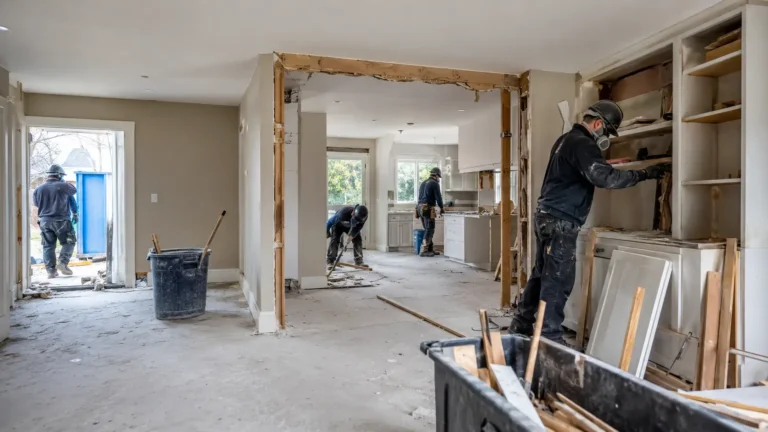
The scope can be small or large. A smaller job may involve removing flooring and cabinets from one room. A larger project may involve stripping an entire home or commercial unit back to framing. In both cases, the work should be controlled, planned, and coordinated with the renovation team.
A professional interior demolition crew works from a defined scope. They identify what should be removed, what should remain, how debris will leave the property, and what cleanup is needed before the next trade arrives. This helps prevent unnecessary damage and keeps the site more organized.
When Do You Need Interior Demolition?
You may need interior demolition when existing materials need to be removed before new construction can begin. This is common when a property is outdated, damaged, being reconfigured, or prepared for a new use.
Homeowners often need interior demolition before major renovations such as kitchen upgrades, bathroom remodels, basement finishing, flooring replacement, wall removal, ceiling removal, or whole-home remodeling. Contractors may need interior demolition before framing, electrical, plumbing, HVAC, insulation, drywall, flooring, or finishing work can proceed.
Commercial property owners and tenants may need interior demolition before leasehold improvements, office layout changes, retail renovations, restaurant upgrades, medical clinic build-outs, or restoration work. In these projects, controlled removal can help expose the space, reveal hidden conditions, and prepare the building for the new layout.
Residential Interior Demolition in Vancouver
Residential interior demolition is commonly used when homeowners are preparing for renovation or restoration. Older Vancouver homes may require careful removal of interior finishes before the contractor can assess framing, plumbing, wiring, insulation, moisture damage, or previous renovation work.
A residential interior strip-out may include removing cabinets, countertops, drywall, flooring, doors, trim, ceiling materials, old insulation, fixtures, tile, bathroom finishes, kitchen finishes, basement walls, and non-structural partitions. The demolition scope should be matched to the renovation plan so the crew removes only what is needed.
For homeowners, professional demolition support can reduce disruption and improve site control. Instead of leaving the renovation contractor to manage heavy debris and removal work, a demolition crew can clear the site and prepare it for the next trade.
Kitchen Interior Demolition
Kitchen demolition may include cabinet removal, countertop removal, backsplash removal, flooring removal, drywall cutting, ceiling work, and fixture removal. Because kitchens often contain plumbing, electrical, ventilation, and older flooring materials, removal should be planned carefully before work begins.
Bathroom Interior Demolition
Bathroom demolition can involve removing tile, tubs, showers, vanities, flooring, drywall, fixtures, ceilings, and damaged materials. Bathrooms are often small spaces with multiple systems behind the walls and floors, so controlled removal is important.
Basement Interior Demolition
Basement demolition may involve removing old drywall, flooring, ceiling panels, insulation, storage rooms, moisture-damaged materials, and outdated finishes. In older homes, basements may also require hazardous material review before demolition begins.
Commercial Interior Demolition in Vancouver
Commercial interior demolition is often required before offices, retail spaces, restaurants, warehouses, clinics, and mixed-use units can be renovated or prepared for new tenants. These projects usually require more coordination because the work may happen inside active buildings with shared access, neighbouring tenants, building management rules, and loading restrictions.
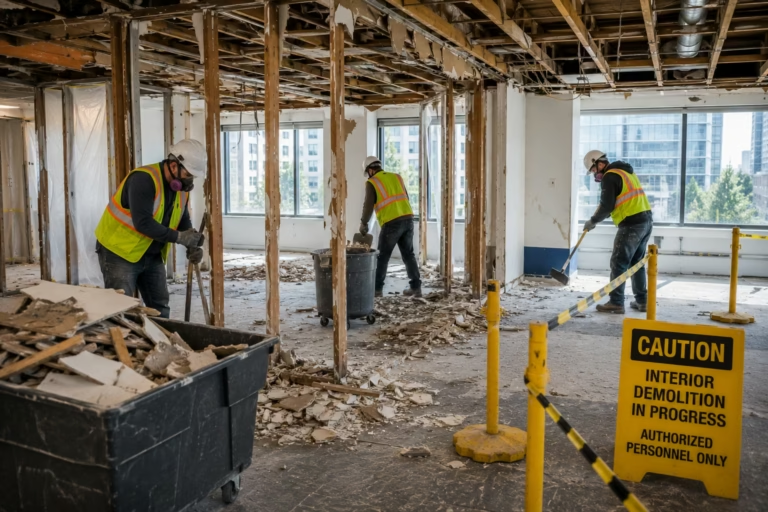
A commercial interior demolition scope may include removing partitions, ceiling systems, flooring, millwork, display fixtures, counters, shelving, doors, washroom finishes, non-structural walls, and previous tenant improvements. The goal is to create a clean and workable space for the next phase of construction.
Commercial demolition should be planned around access and scheduling. Debris may need to move through elevators, loading docks, corridors, stairwells, or rear entrances. Work may need to happen during specific hours to reduce disruption. A contractor who understands these conditions can help keep the project more predictable.
Office Renovations
Office demolition may involve removing private office walls, boardroom partitions, carpet, ceiling tiles, reception counters, millwork, and old work areas. This helps prepare the space for a new layout, open office design, or tenant improvement project.
Retail and Restaurant Renovations
Retail and restaurant projects may require the removal of display walls, counters, seating areas, washrooms, flooring, kitchen-adjacent materials, and ceiling systems. These spaces often work on tight opening or turnover schedules, so demolition and cleanup need to be efficient.
Selective Demolition vs. Full Interior Gut-Out
Interior demolition can be selective or broad in scope. Selective demolition removes only specific materials or areas. A full interior gut-out removes most or all interior finishes so the property can be substantially rebuilt.
Selective demolition may be enough when a project requires removal of one wall, one room, one ceiling system, one flooring area, or one set of fixtures. Full gut demolition may be needed when the entire home, office, retail space, or commercial unit is being redesigned or rebuilt.
The right approach depends on the renovation plan. Removing too much can create unnecessary repair work. Removing too little can delay the next trade. A clear scope helps the demolition crew prepare the site correctly.
Rocky Demolition & Asbestos Removal provides demolition services in Burnaby and Vancouver for residential and commercial projects that require controlled removal, cleanup, and site preparation.
Why Interior Demolition Requires Planning
Interior demolition affects the entire renovation sequence. If removal work is incomplete, the next trade may not be able to start. If debris is left on site, crews may lose time clearing access. If hazardous materials are disturbed without testing, the project may need to stop.
Planning starts with the renovation scope. The homeowner, contractor, or property manager should identify the rooms being renovated, the materials being removed, the areas that must be protected, and the timeline for the next phase. The demolition crew should also understand how debris will leave the property and what cleanup is expected.
Good planning prevents avoidable damage. For example, a crew may need to remove drywall while protecting structural framing, stairs, windows, mechanical systems, fire-rated assemblies, or adjacent finished areas. In commercial buildings, planning may also include elevators, loading docks, shared corridors, parking, and tenant communication.
Hazardous Material Review Before Interior Demolition
Older Vancouver properties may contain materials that should be tested before demolition begins. Asbestos-containing materials may be present in drywall compound, vinyl flooring, sheet flooring, ceiling texture, pipe wrap, duct insulation, adhesives, plaster, or other older building products.
If these materials will be disturbed, asbestos testing should happen before cutting, scraping, drilling, sanding, or removal work begins. When asbestos is confirmed, abatement should be handled before general demolition continues. Contractors should review current WorkSafeBC asbestos certification and licensing requirements when asbestos-related work is part of the project.
Hazardous material planning may also involve mold-affected materials, moisture damage, lead-based coatings, or other site-specific concerns. The key is to identify these issues before demolition spreads dust or debris through the work area.
Rocky Demolition & Asbestos Removal provides asbestos testing and inspection services for projects where renovation or demolition may disturb suspect materials.
Interior Demolition and Mold Concerns
Interior demolition can expose hidden mold or moisture damage behind walls, under flooring, around windows, in basements, near plumbing, or inside ceiling cavities. If mold-affected materials are found, they should be addressed before rebuilding begins.
Covering over mold-damaged materials with new finishes can create future problems. Removing affected drywall, insulation, flooring, cabinets, or trim may be necessary before the renovation can continue. The moisture source should also be reviewed so the issue does not return after repairs.
For renovation projects involving moisture damage, Rocky Demolition offers mold removal services in Vancouver and Burnaby to support safer site preparation before reconstruction.
Debris Removal and Site Cleanup
Interior demolition produces large amounts of debris. Drywall, flooring, wood, metal, tile, cabinets, fixtures, ceiling materials, insulation, doors, trim, and general construction waste can quickly block the work area if they are not removed properly.
Debris removal should be part of the demolition plan. The crew should know where materials will be staged, how waste will leave the property, and whether bins, trucks, elevators, or loading areas are required. In tight Vancouver properties, access planning can make a major difference.
Post-demolition cleanup is also important. The next trade should not have to work around piles of debris. A clean site gives contractors better access, improves visibility, and helps the project move into framing, rough-ins, inspection, or finishing with less delay.
How Interior Demolition Supports Better Renovation Sequencing
Renovation work depends on proper sequencing. Demolition usually comes before framing, electrical, plumbing, HVAC, insulation, drywall, flooring, cabinetry, millwork, painting, and finishing. If demolition is rushed or poorly organized, each step after it can be affected.
A controlled demolition phase gives the project team a clearer view of the property. Once old finishes are removed, contractors can inspect framing, subfloors, walls, ceilings, mechanical routes, plumbing access, and hidden damage. This information helps the renovation team make better decisions before rebuilding.
For commercial projects, sequencing also affects tenant move-in dates, lease obligations, business opening timelines, and building access schedules. For residential projects, sequencing affects how long the home remains under construction and how quickly trades can begin their work.
What Should Be Included in an Interior Demolition Plan?
A practical interior demolition plan should define the rooms or areas included, the materials being removed, the materials being protected, access routes, debris removal process, hazardous material concerns, cleanup expectations, and target completion date.
The plan should also identify whether utilities need to be shut off, whether fixtures require trade coordination, whether building management approval is needed, and whether asbestos or mold testing should happen before removal starts.
For larger projects, demolition may be completed in phases. One floor or area may be cleared first so trades can begin while demolition continues elsewhere. For smaller renovations, the goal may be to complete removal and cleanup quickly so construction can start immediately.
Questions to Ask Before Hiring an Interior Demolition Contractor
Before hiring a demolition contractor, property owners and general contractors should ask practical questions to confirm whether the company understands the project scope.
- What materials will be removed?
- What areas or systems need protection?
- Is asbestos testing or hazardous material review needed?
- How will debris be removed from the property?
- What cleanup is included after demolition?
- Will the work affect neighbouring units, tenants, or shared spaces?
- Are there access, parking, elevator, or loading restrictions?
- When does the next trade need the site ready?
- How will unexpected site conditions be communicated?
These questions help reduce misunderstandings and keep the demolition phase aligned with the larger renovation plan.
Do You Need Interior Demolition Before Renovation?
You may need interior demolition before renovation if existing drywall, flooring, ceilings, fixtures, cabinets, non-structural walls, or damaged materials must be removed before new construction can begin. Interior demolition helps expose hidden conditions, clear the work area, and prepare the property for framing, rough-ins, repair, or finishing.
It is especially useful for kitchen remodels, bathroom renovations, basement upgrades, whole-home renovations, office improvements, retail build-outs, restaurant renovations, and commercial tenant improvements.
Interior Demolition Checklist
- Confirm the renovation scope and future layout.
- Identify what should be removed and what should remain.
- Review the age and renovation history of the property.
- Arrange asbestos testing before disturbing suspect materials.
- Check for mold or moisture damage before rebuilding.
- Plan access, parking, debris routes, bins, and loading areas.
- Protect floors, shared spaces, building systems, and finished areas.
- Coordinate demolition around other trades and inspections.
- Include debris removal and site cleanup in the scope.
- Confirm the site is ready for the next construction phase.
Local Interior Demolition Support in Vancouver
Rocky Demolition & Asbestos Removal supports homeowners, contractors, property managers, restoration companies, and commercial project teams with demolition, asbestos testing, asbestos removal, deconstruction, mold removal, cleanup, and disposal-related services.
This service mix is useful because interior renovation projects often involve more than simple removal. A home renovation may require asbestos testing before drywall or flooring is removed. A commercial tenant improvement may need selective demolition and debris cleanup. A restoration project may uncover mold or moisture damage during demolition.
Rocky Demolition serves Vancouver, Burnaby, Richmond, Surrey, Langley, Coquitlam, Delta, New Westminster, Port Moody, Abbotsford, and nearby BC communities. Property owners and contractors can review Rocky’s service areas to confirm local coverage.
Prepare Your Space for Renovation the Right Way
Interior demolition is one of the most important steps in preparing a property for renovation. When it is planned properly, the site becomes cleaner, safer, and easier for trades to work in. When it is rushed or poorly coordinated, the project can face unnecessary delays, cleanup issues, and hidden hazards.
Whether you are renovating a home, preparing a commercial unit, managing a tenant improvement, or restoring a damaged property, controlled interior demolition helps create a better starting point for the work ahead.
If you need interior demolition services in Vancouver, contact Rocky Demolition & Asbestos Removal through the contact page to discuss demolition, asbestos testing, asbestos removal, mold removal, cleanup, and site preparation support.